Sunday, March 10, 2019

This Friday

Just a reminder that your plan for TASK 1 in writing is due ie Report on Childhood Obesity in Australia is due this Friday. 

Attached is the plan again.  Please complete the plan using the second last page of the notes ie cover page, annotated biography (not in a table - could be about 2 pages), introduction, body, conclusion and references (can leave in a table if easier for you). When complete print of copy of the last page, sign the last page and ask the teacher to check before you start.


Complete this plan of your report in dot points - please don't use sentences except for your annotated bibliography.

Save on your usb and adjust rows to suit.

Prepare a cover page
Annotated Bibliography
Introduction
*
*
*
Body
Subheading 1
*

*
Subheading 2
*
*

Subheading 3
*
*

Subheading 4
*
*

Conclusion
Summary
*
*

Reference List

*
*
*
*
*

English for Academic Purposes

Student Plan for the Childhood Obesity Report

Student’s Name:  _________________________________   Date:  ___________________

1  Has this proposal been completed by you?
                                                                          
                                                                              Yes      o                      No    o

2  Have you copied from any other source without acknowledgement of the source?

      Yes      o                      No    o


Signature of student:  ___________________________________  Date: ___/___/________

Proposal approved
                                                                                                                     Yes      o                      No    o
               
Signature of teacher:  ___________________________________  Date: ___/___/________


Saturday, March 2, 2019

How to write a critical response

Unit Title: Analyse and respond to texts in digital and online contexts

Unit Code: NSWTTCH401

Portfolio Assessment Task 3                                                         


For Task 3 you need to write a critical response to an article.

Attached is a link to an academic blog from RMIT university.  Read this article to find out how to write a critical response.  We shall also discuss this in class tomorrow.

https://www.rmittraining.com/blog/academic-genres-critical-response

Sunday, February 24, 2019

Library session this Friday - academic journals

On Friday, 1 March, we will be going to the library to learn how to find academic journals.  These are not needed for TASK 1 in writing but 2 journals must be used in your second writing task.

cheers
Dawn

Saturday, February 23, 2019

Sem 1 2019 Portfolio Assessment Task 3 - NSWTTCH401

Portfolio Assessment Task 3 NSWTTCH401

Write a response to the opinions expressed in the article.  You need to comment on the author's opinions and give your own views on the subject.

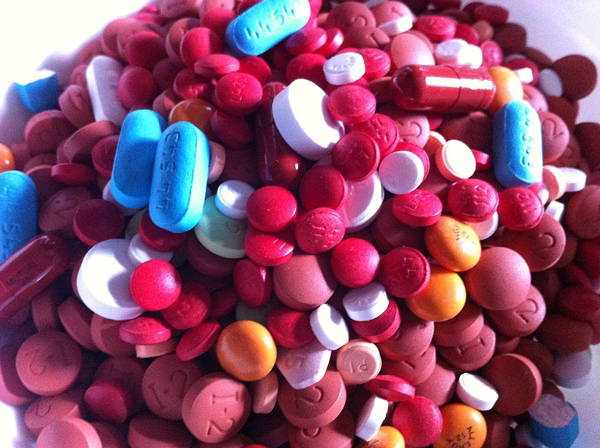
https://www.aph.gov.au/About_Parliament/Parliamentary_Departments/Parliamentary_Library/FlagPost/2018/May/The_pros_and_cons_of_pill_testing

The pros and cons of pill testing


Last weekend saw Australia’s first state government sanctioned pill testing trial at the Groovin the Moo music festival in Canberra. Noffs Foundation chief executive, Matt Noffs, who is a member of the Safety and Testing and Advisory Service at Festivals and Events (STA-SAFE) consortium, suggested that the trial was a success in terms of reducing harms to festival attendees.
In recent years, there have been a number of deaths in Australia as a result of toxic quality pills being consumed at music festivals and nightclubs, as well as party drug-related overdoses. In response, public health experts and other commentators have promoted pill testing as an intervention that should be introduced in order to reduce drug-related harm among young people in recreational settings.
However, others have opposed any such proposals, most frequently using the argument that abstinence is the only way to ensure young people are safe from the effects of illegal drugs. This FlagPost briefly canvasses some of the main arguments for and against pill testing.
Pill testing
While producers of regulated pharmaceutical drugs must adhere to strict production standards, illegal drugs are not subject to such requirements. As a result, illicit drug markets have long been associated with harms arising from poor product safety. These harms typically arise due to contamination and adulteration, which can cause poisoning, or unintentional overdose by users due to uncertainty about the strength and purity of the drugs.
Pill (and other drug) testing may be described as ‘a service that invites ordinary citizens to anonymously submit samples of illegal drugs for forensic analysis, and provides individualised feedback of results and counselling as appropriate’. Ideally, armed with information on the purity and composition of their drugs, would-be users are able to make an informed decision on whether or not to take them.
Pill testing services have been operating in some form for around 25 years in a number of countries.
Arguments for pill testing
There is support for the trial of pill testing in Australia among public health organisations and some federal parliamentarians. In 2014 Professor Alison Ritter, Director of the Drug Policy Modelling Program at the National Drug and Alcohol Research Centre (NDARC) outlined a number of reasons why pill testing should be piloted:
  • pill testing has been shown to change the black market, with products publicly identified as dangerous being found to leave the market
  • ingredients of tested pills started to correspond to the expected components over time, suggesting that pill testing can place pressure on manufacturers to refrain from using adulterants in drugs
  • pill testing changes behaviour, with research suggesting that negative results would deter a majority of people from consuming drugs and spur them to warn their friends
  • visits to pill-testing booths create an opportunity for providing support and information over and above the testing itself and
  • pill testing enables the capture of long-term data about substances in the drug market and the potential for a warning system against new, unexpected, or very dangerous drugs and consumption trends.
Arguments against pill testing
Perhaps the main arguments against pill testing are that, firstly, on-site tests have a limited capacity to accurately detect harmful substances, and, secondly, by permitting on-site pill testing, contradictory messages are being sent about the risks related to the use and possession of controlled substances.
Andrew Leibie, a scientist with Safework Laboratories and a member of the International Association of Forensic Toxicologists, has raised some concerns with regard to the usefulness of on-site pill testing. These may be summarised as follows:
  • on-site drug testing is fast and easy, but not particularly accurate. Proper analysis of pills requires highly sophisticated laboratory equipment and can take days of work by trained scientists
  • on-site pill testing kits are severely limited in what they detect, with test kits unlikely to detect contaminants or other toxic compounds in pills
  • on-site tests cannot test for concentration and high doses of ecstasy and methamphetamine are often fatal by themselves and
  • on-site tests cannot detect new designer drugs on the market, such as NBOMe—or N-Bomb—which has been linked to three deaths in Melbourne in 2017.
Leibie also expresses the concern that pill testing services could leave consumers with a false sense of security that the party drugs they buy may be safe, when this is not the case.
It should be noted that in his critique Leibie focuses on the limitations of colourimetric tests and other on-site test kits, in comparison to laboratory testing. However, these limitations are well documented, and, according to Dr Monica Barratt, a researcher with NDARC, acknowledged by most pill testing services. Barratt argues that pill testing services only use such kits as their main tool when they don’t have access to better technology. Fully-funded pill testing services typically use proper laboratory equipment, as was the case at the Groovin the Moo festival. NBOMe was believed to have been detected at the Groovin the Moo festival, along with n-ethylpentylone, a stimulant responsible for the hospitalisation of 13 people in New Zealand recently.
Harm minimisation versus zero tolerance
Arguments for and against pill testing are typically informed by broader debates about the merits of harm minimisation versus zero tolerance approaches to illicit drugs.
From a harm minimisation perspective, completely eliminating a drug or drugs from society is an unrealistic aim that typically causes more harm than good. As a result, we would do better to restrict the damage caused by them, even if this means an overall increase in the use of drugs. From a zero tolerance standpoint, illicit drug use should be prohibited under any circumstances. Harm reduction measures—such as pill testing—it is argued, can encourage and enable drug use, keep people stuck in a pattern of addiction, and serve as a Trojan Horse for drug law reform and the legalisation of drugs.
There is constant tension in Australia between advocates of these perspectives, and frequent calls for a shift in emphasis between demand, supply, or harm reduction measures. However, Australia’s broad approach to illicit drugs under the National Drug Strategy remains one of harm minimisation, and the country has in place a significant number of measures to reduce the harms caused by drugs. These include Sydney’s Medically Supervised Injecting Centre, needle and syringe programs and opioid substitution treatment.
Additional Reading


Tuesday, March 6, 2018

Understanding your HECS-HELP debt

Understanding your HECS-HELP debt


HECS-HELP is a loan scheme for eligible students enrolled in Commonwealth supported places to pay their student contribution amounts. It doesn’t extend to additional study costs such as accommodation or textbooks. To help you better understand how HECS-HELP affects you and your taxes, we’ve put together a comprehensive guide to getting to know HECS-HELP.
What is HECS-HELP?
HECS-HELP is both a loan and a student discount. Let’s say you’re an eligible student – the Australian Government (through the HECS-HELP scheme) will pay your course fees for you. If you pay your course fees upfront ($500 or more), you can use the scheme to receive a discount.
The Australian Government will pay the amount of your loan or discount directly to your education institution. Once your income reaches a certain threshold (currently $55,874 for the 2017-2018 financial year), loan repayments are then made through the tax system. If you wanted to pay off your debt faster, you can make voluntary repayments, regardless of how much you earn.
A HECS-HELP debt kicks off immediately after the elected 'census' date for any University course you’ve nominated to receive HELP assistance for.
Am I eligible for HECS-HELP?
To qualify for HECS-HELP, you have to meet the following standards:
  • Be studying in a Commonwealth supported place;
  • Be an Australian citizen; or
  • Be a New Zealand Special Category Visa holder who meets the long-term residency requirements; or
  • Be a permanent humanitarian visa holder;
  • Be enrolled in each unit at your university by the census date;
  • Meet the relevant HECS-HELP residency requirements; and
  • Submit a valid request for Commonwealth support and HECS-HELP form by the census date (or earlier administrative date) to your university.
When do I have to repay my HECS-HELP?
Your HECS-HELP debt repayments will take effect through your taxes once your income surpasses the compulsory repayment threshold, even if you’re still studying.
The minimum Help Repayment Income (HRI) thresholds change each year. To make your loan repayments for 2017-18, the threshold is set at $55,874. Where income exceeds this threshold, a compulsory repayment of at least 4% of your income takes effect as part of your tax assessment. The percentage increases in tandem with your income.
Rates for 2017-18 are as follows:
Repayment Income (RI*)
Repayment Rate
 Below $55,874
 Nil
$55,874 – $62,238
 4.0%
$62,239 – $68,602
 4.5%
 $68,603 – $72,207
 5.0%
$72,208 – $77,618
 5.5%
 $77,619 – $84,062
 6.0%
 $84,063 – $88,486
 6.5%
 $88,487 – $97,377
 7.0%
 $97,378 – $103,765
 7.5%
 $103,766 and above
 8.0%


From 1 July 2018, a new lower income repayment threshold of $42,000 will be ushered in with a repayment rate of 1%. Higher threshold bands will increase to a top 10% repayment rate on income over $119,882.
What is the HECS-HELP repayment income threshold?
Your HECS-HELP repayment income (HRI) differs from your taxable income. Calculate it like this:
  • Your taxable income for an income year, plus
  • Your total net investment losses, plus
  • Any total reportable fringe benefit amounts shown on your PAYG payment summary; plus
  • Reportable super contributions; and
  • Any exempt foreign employment income from the current income year.
How to check your HECS-HELP debt balance
There are two ways to check how much you owe on your HECS-HELP debt balance:
1.   Contact the ATO on 13 28 61, and provide them with your TFN. This way, they can verify your personal details and tell you your HECS-HELP balance.
2.   View your HECS-HELP balance online via the myGov site. If you link your account to the ATO, you’ll be able to see your balance online.
Repaying your HECS-HELP loan
Compulsory HECS-HELP Repayments
When you start a new job, make a note to let your employer know you’ve got a HECS-HELP debt. Just tick the box on your TAX DECLARATION FORM which you’ll need to fill out before you get to work.
Your employer will set aside additional tax from each pay to cover your estimated HECS-HELP debt based on your annual HRI. Keep in mind, your employer will withhold the additional tax based on the income they pay to you. They won’t factor in other income sources, previous jobs or investments. So, if you’ve got any of these sources of income, you’ll have to make a top-up payment once you lodge your tax return.
Voluntary HECS-HELP repayments
If you like to stay ahead, you can make voluntary repayments anytime to the ATO by BPAY or credit card. Visit the ATO’s website for more information on how and when to make repayments.
Tax tips for repaying your HECS-HELP debt
Upfront organisation will save you precious pennies. Keep all work-related receipts and claim deductions for everything you’re entitled to. This can reduce your HRI and minimise your compulsory annual repayment amount. 


Saturday, March 3, 2018

Examples of essays from many disciplines at UTS


If you are interested I have attached a link from UTS showing examples of essays from different disciplines.  There is also one on childhood obesity.


Examples of essays from many disciplines

cheers
Dawn